Coffee Shop Profit Margins
 Dreaming of owning a coffee shop and actually making money doing it? You’re not alone.
In fact, many people wonder whether starting a coffee shop would be financially worthwhile. And I believe it’s an important question to consider.
As with any business, it’s best to look at the industry as a whole. How is the coffee industry doing this year and in the foreseeable future?
Coffee is booming in the U.S., and in 2025, customers are spending more than ever on premium drinks and experiences.
But here’s the thing that impacts you the most: while the average coffee shop profit margin ranges from 5% to 10%, many independent cafés are quietly hitting 12% to 18% by applying the right systems, strategies, and pricing models.
This is a big profit margin difference that many indie coffee shops are quietly enjoying.
The difference? Planning, efficiency, and a willingness to rethink the numbers.
In this article, I aim to help you understand what affects your coffee shop's profit margins, where your money is allocated, and provide actionable strategies to help your café thrive in today’s competitive market.
Improve Your Coffee Shop Profit Margin Numbers

What Are the Average Coffee Shop Profit Margins?
Profit margins vary depending on your business model, location, and efficiency. The good news is that with many small indie coffee shops, owners have a tremendous amount of power and ability to steer this ship into a profit powerhouse.
Here’s a quick breakdown:
| Business Type | Average Profit Margin |
| Typical Independent Café | 5% – 10% |
| Well-Run Drive-Thru Stand | 10% – 15% |
| High-Performing Independents | 12% – 18% |
| Large Chains (e.g. Starbucks) | 15% – 25% |
Want to dive deeper into different business models? Check out:
[“Coffee Truck vs. Brick-and-Mortar Coffee Shops: Which Model Wins?”]
“Average” doesn’t mean “inevitable.” The owners who consistently outperform these numbers do so by engineering smarter coffee shop menus, pricing intentionally, and running tighter operations. Of course, there will always be a little trial and error. Explore our coffee blog for additional discussion on these points.
What a $5 Latte Really Costs
How much do coffee shops make?
To understand margins, you need to know where your money goes. Here’s a sample breakdown of what typically goes into a $5 latte at a small, independent café:
- Coffee beans: $0.50
- Milk & ingredients: $0.75
- Cup, lid, sleeve: $0.30
- Labor and equipment costs: $1.25
- Overhead (rent, utilities, POS fees): $1.00
- Net profit per cup: ~$1.20 (~24%)
Want a complete breakdown of startup costs? Read:
[“How much does it cost to make 100 coffees?”]
Pro Tip: That $1.20 profit per cup adds up quickly if you get your menu, pricing, and operational efficiencies right. If you are selling $300 cups a day, not including food and pastries, what kind of profit are you looking at?
Coffee Shop Profit Margin (Sample Case)
How “Café Mi Vida” Jumped From 7% to 16% Margins
To help illustrate what I’m talking about, I’m going to give you an example.
Let’s take Café Mi Vida, a small shop in Austin. Let’s say they opened in 2022, their profit margins sat at 7% — right on the button with the national average. Sales were steady, but profits were thin.
Here’s what they did to turn things around:
- Streamlined their menu from 25 drinks to 10 best-sellers.
- Introduced signature cold brews with 60%+ margins.
- Created bundled “coffee + pastry” deals to increase average ticket size.
- Optimized labor schedules, saving $2,400 per month without reducing the quality of service.
Within six months, Café Mi Vida doubled their margins to 16% — without raising prices across the board. These are power moves all within decision-making capabilities.
The truth is that too many menu options often lead to waste, unnecessary inventory costs, and inefficiency. People are willing to pay more for something that they can’t get anywhere else. Signature drinks provide this opportunity to improve your coffee shop’s Unique Selling Proposition, generate greater perceived value, and actually boost your profit margins.
Bundling and menu options create great ways to improve sales, increase per-ticket revenue, and simplify orders, decreasing wait times.
But perhaps the biggest adjustment you can make is scheduling. Inefficient scheduling can burn through labor hours (and jack up payroll taxes) every month, leading to huge losses every year. By nailing your barista scheduling, you’ll be one giant step closer to improving your coffee shop’s profit margins.
Want more examples of real strategies that work? Check out:
[“How to Build a Profitable Coffee Shop”]
7 Actionable Strategies to Boost Your Coffee Shop Profit Margins
Okay, so now that we’ve discussed the basics, let’s get into the nitty-gritty tactics that move the needle. These strategies are practical, actionable, and proven to increase profitability.
1. Engineer Your Menu for Profit
Design your coffee shop menu solely around high-margin drinks like cold brews, teas, and specialty lattes. Highlight “signature” items that justify premium pricing and make them the stars of your menu.
If you want to offer drip coffee, that’s okay, but a smartly engineered menu naturally nudges customers toward your most profitable items. Even a 5% to 15% price increase in average ticket size can add thousands of dollars to your annual revenue.
Related: [“Coffee Shop Menu Design That Maximizes Profits”]
2. Use Anchor Pricing to Sell More
Add one or two premium drinks (like a $7 nitro cold brew) to make your mid-range options seem like a better deal. Using pricing psychology guides purchasing decisions without reducing quality.
Anchor pricing can boost average ticket sizes by 10%–15%. Customers feel like they’re making a smart choice — and your profit margins improve.
3. Reduce Waste Without Sacrificing Quality
Track milk, bean, and syrup waste weekly to identify areas where money is being lost. Sell end-of-day pastries at a discount or repurpose them creatively — like using unsold croissants for bread pudding.
Food and ingredient waste can silently drain 5%–10% of profits monthly. Reducing waste without cutting quality is one of the fastest ways to improve margins. Additionally, consider partnering with a local non-profit and donating food for a possible charitable donation. This would reduce your taxes.
Having a reliable, robust coffee shop POS system that tracks inventory will help you make better decisions about what to buy, but more importantly, what is not selling.
Related: [“Inventory Management Tips for Coffee Shop Owners”]
4. Dial In Your Labor Costs
As I mentioned earlier, scheduling is probably the most important thing you need to master as a new coffee shop business owner.
Labor is often your biggest controllable expense, typically 25%–30% of revenue. Use scheduling software or POS data to align staff with peak demand periods like morning rushes, lunch breaks, and weekends.
In addition to utilizing tools like a sound POS system, we can ignore just how important it is to hire the best people possible. Reliable, honest, and diligent working baristas. In addition, train them and pay them well to help reduce turnover costs and inefficiencies, and to improve overall morale. A good employee can help you save money. A great employee will help make you money.
Cutting just two unnecessary labor hours per day can save $1,000–$2,000 per month while maintaining excellent service.
5. Leverage Loyalty Programs and Upsells
Regulars drive your profits. Use a digital loyalty app to reward repeat visits, and train baristas to offer subtle upsells like alternative milks, flavor shots, or pastry pairings.
Loyalty program customers spend up to 40% more over time. Pair that with upsells that add $1–$2 per ticket, and your revenue compounds quickly.
Training your baristas to promote your coffee menu items and upsell will have a tremendous impact on your daily sales, monthly numbers, and annual revenue.
6. Negotiate Smarter With Vendors
Find cheaper inventory wherever you can. This is business, and your margins depend on it.
It will be important to bulk-buy supplies when you can, but also talk to vendors directly – including wholesale coffee roasters. Many are open to discounts if you ask — and partnering with local roasters can lead to better pricing and cross-promotion opportunities. Loyalty is important, but loyalty should run both ways. Every vendor needs to understand that you are trying to make a profit, too.
Saving even 5 cents per lid or sleeve may not sound like much, but across thousands of drinks, it adds up to thousands in yearly savings.
7. Rethink Your Pricing Strategy
Price based on value, not fear. Customers will pay $5.50 or even $6 for a latte if the quality, experience, and service justify it. Test price increases on best-selling items and carefully measure customer response.
Why it works: A 25¢ price bump on a drink you sell 300 times per day equals an extra $27,000 per year — often without losing a single customer.
Developing your brand, enhancing perceived value, and making visible improvements to your space and offerings can help offset modest price increases. Additionally, well-trained and friendly baristas will often help customers move past a reasonable price increase.
Related: [“How to Set Prices That Maximize Coffee Shop Profits”]

Hidden Profit Leaks That Could Be Costing You Thousands
Even well-run shops lose profits in ways they don’t notice:
- Payment processor fees are creeping above 3%
- POS subscriptions loaded with unnecessary add-ons
- Spoiled inventory or expired ingredients
- Equipment downtime and repair delays
- High staff turnover leading to retraining costs
- Over and underscheduling baristas
Related: [“Hidden Costs that Sink Coffee Shops”]
Pro Tip: Conduct a quarterly profit leak audit. It’s one of the easiest ways to recover lost dollars hiding in plain sight.
How to Set Your Prices for Profitability
Your pricing model is one of the most powerful levers you control.
Formula:
Price = Total Costs + Desired Profit Margin
Example:
If your cost per latte is $2.80 and you want a 65% margin, your price should be $7.95.
Final Thoughts — Build a Coffee Shop That Thrives
Margins aren’t fixed — they’re built. We have seen some coffee businesses struggle to turn a profit. Independent coffee shops can beat industry averages by focusing on:
- Strategic menu design
- Intentional pricing
- Tight operational systems
- Fix scheduling
- Building customer loyalty
You don’t need Starbucks’ volume to win. Focus on experience, quality, and community, and customers will pay for it.
If you want to take the next step, check out:
Ready to Get Started?
Start Your Dream Coffee Shop Business
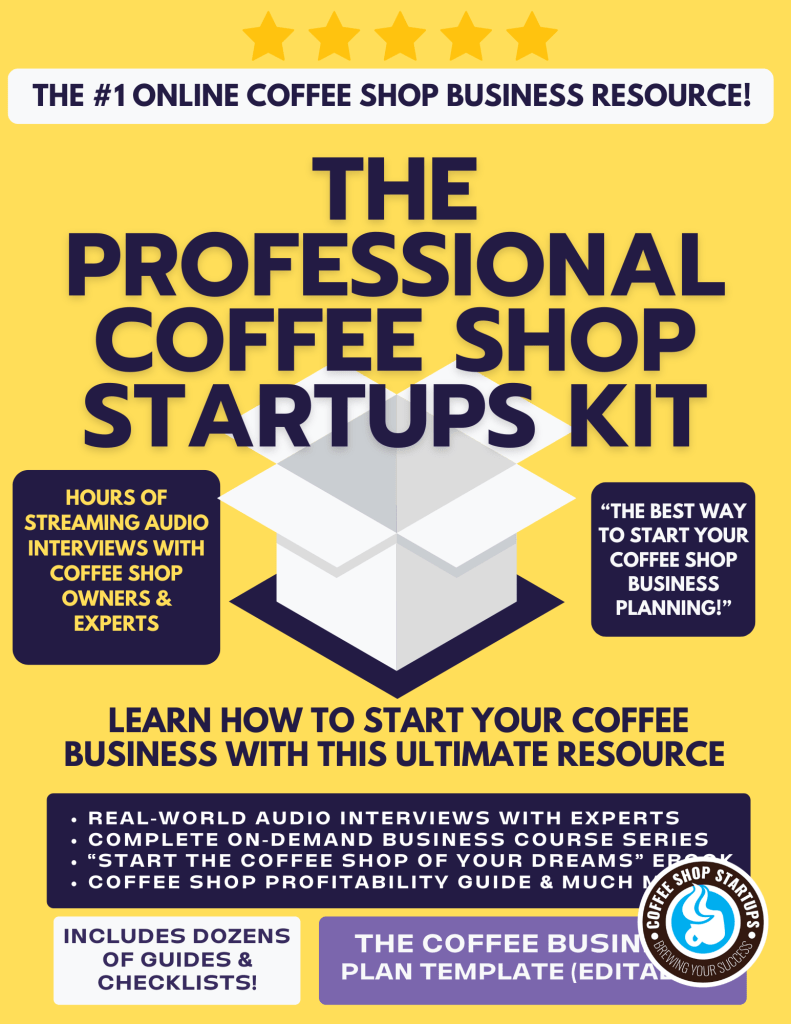
Starting a coffee shop is exciting, but it can also feel overwhelming. Where do you start? What steps should you take? How do you avoid costly mistakes? That’s where the Professional Coffee Shop Startups Kit comes in. It’s designed to give you a clear, practical roadmap to opening a successful coffee business—without wasting time or money on guesswork.
Inside, you'll find:
 Expert interviews with real coffee shop owners and business experts.
An On-Demand 37-lecture course covering everything from business planning to daily operations.
Editable coffee shop business templates, financial documents, checklists, and planning tools to keep you on track.
A step-by-step startup guide that walks you through concept development, permits, branding, and more.
Cost-saving strategies to help you launch your coffee business on a budget.
Whether planning a small coffee cart or a full-scale café, this kit is built to help you start confidently. Join the thousands of successful coffee entrepreneurs who started with a dream and a great plan. Your journey to coffee shop greatness begins right here!
Comprehensive. Proven. Affordable.
The Professional Coffee Shop Startup Kit
(Instantly Delivered To You)


* The information on this page is for educational purposes only. We do not offer legal or investment advice.

Coffee Shop Startups
Based in Seattle, Washington, USA, Coffee Shop Startups is dedicated to providing you with the most relevant information on how to start a coffee shop business successfully. Over the last 11 years, we've helped thousands of aspiring coffee business owners worldwide. We harness the experience, wisdom, and knowledge of many successful coffee shop owners to help you increase your chances of success and profits. We support business owners who want to start a coffee business by providing them with valuable information on starting their coffee business successfully.