How Big Does a Coffee Shop Need to Be?
How Much Space Do You Really Need for a Coffee Shop?
It turns out, not much.
While there isn’t one perfect size for a coffee shop, many coffee businesses can operate within surprisingly small spaces. I’ve seen tiny coffee bars operate in less than 100 square feet and large cafés that exceed 2,000 square feet.
Of course, the size you need depends on your overall coffee shop concept, menu, equipment, expected customer volume, seating, storage, restrooms, and local health and building requirements. It also depends on whether you expect customers to stay awhile or primarily grab their coffee and go.
I’ve seen coffee business ideas work in some of the smallest spaces in nearly every city. Ideally, you want to develop your concept first, understand your needs and budget, and then find a space suitable to support it.
However, I’ve been doing this awhile, and I know that not every story works out that way. Sometimes you may find a particular space that works because of its location, price, or other important factors—and then adapt your concept to fit it.
Either way, when starting a coffee shop, the goal is to find a space that works for both your coffee shop concept and your budget.
How Many Square Feet Does a Coffee Shop Need?
Here is a general ballpark of coffee shop sizes to help you begin your search:
| Coffee Shop Concept | Approximate Size |
| Mini Coffee Bar / Micro Café | 100–400 sq. ft. |
| Small Coffee Shop | 400–800 sq. ft. |
| Neighborhood Café | 800–1,500 sq. ft. |
| Large Coffee Shop | 1,500–2,500+ sq. ft. |
These ranges are for general reference only. Your actual coffee shop requirements should be based on your menu, equipment, layout, and local regulations. Your city or county may also have requirements that affect seating, occupancy, restrooms, accessibility, and other aspects of your space.
Let’s look at these options in greater detail.
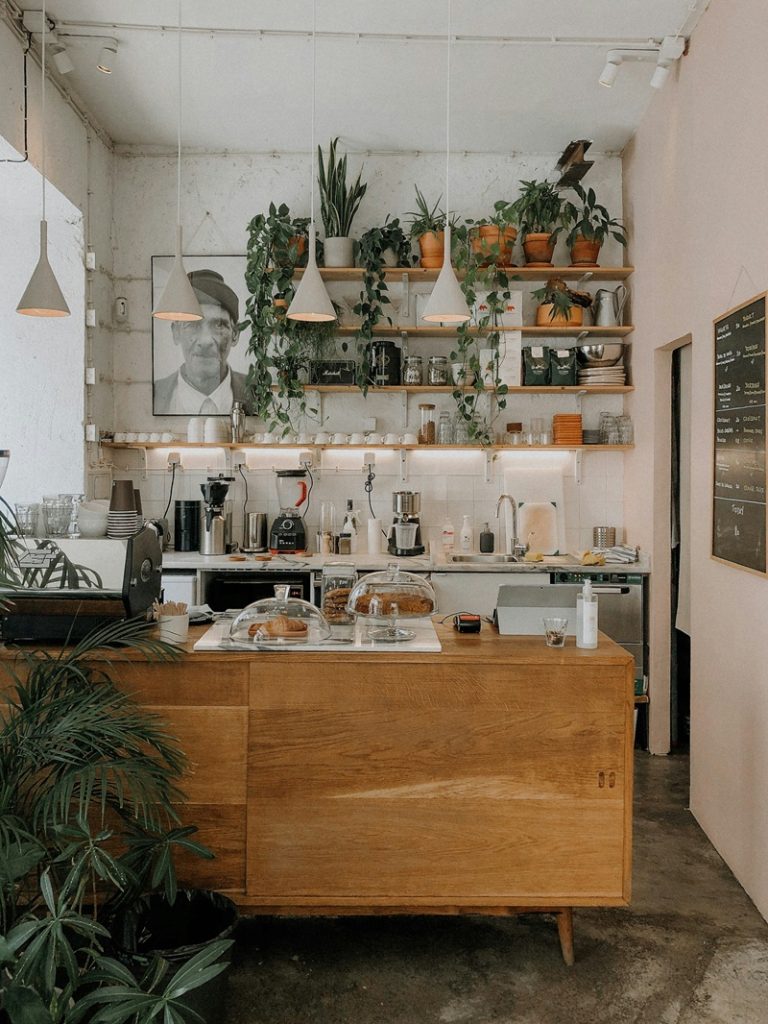
Mini Coffee Bar or Micro Café: 100–400 Square Feet
Mini cafés are one of my personal favorite coffee shop concepts. They are often overlooked because they may not look like your typical coffee shop, but they can provide a powerful way to get started.
A mini coffee bar might work in an office or commercial building, hospital or medical complex, college campus, retail store, market, shared commercial space, transit location, or small street-facing retail unit.
These coffee bars are generally better suited for grab-and-go customers, limited menus, and efficient equipment.
The potential advantages are significant: lower rent, smaller security deposits, potentially lower build-out costs, fewer furnishings, lower utilities, and less space to maintain.
The tradeoff is less storage, refrigeration, food preparation, seating, workspace, and room to expand your menu.
Still, coffee is one of those businesses that can make great use of a small location where many other retail businesses simply can’t.
Small Coffee Shop: 400–800 Square Feet
At 400 to 800 square feet, you’re getting closer to what many people picture when they think about a small coffee shop.
Depending on the layout, this may provide enough room for your espresso machine, grinders, brewing equipment, refrigeration, POS system, sinks, storage, and some customer seating.
The key word here is layout.
A poorly designed 700-square-foot café could function worse than a thoughtfully designed 500-square-foot coffee shop.
Think about how your baristas will actually work. If they have to walk across the café every time they need milk, cups, ice, or pastries, those extra steps add up quickly during a morning rush.
With smaller spaces, every square foot needs a purpose.
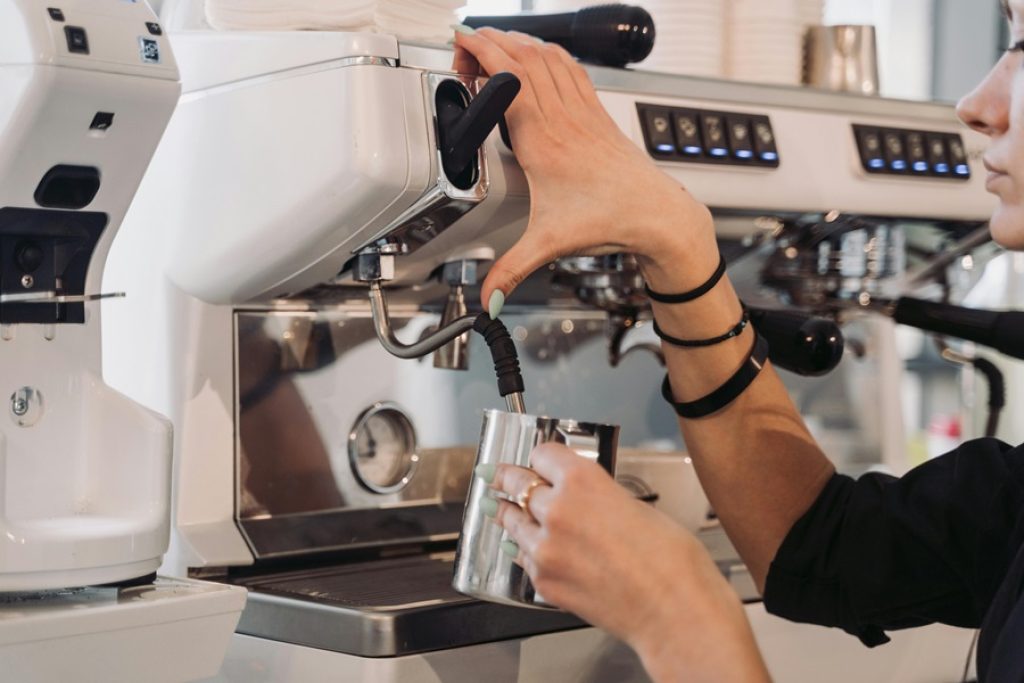
Neighborhood Coffee Shop: 800–1,500 Square Feet
This is probably closer to what many people envision when thinking about a traditional neighborhood café.
At this size, you may have greater flexibility for customer seating, a larger service counter, refrigeration, storage, pastry displays, food preparation, restrooms, merchandise, and comfortable customer circulation.
But every additional square foot comes at a cost.
More space generally means more rent, a larger build-out, more furniture, greater heating and cooling expenses, and more space to clean and maintain.
It can be easy to fall in love with a beautiful commercial space. Just remember that once the excitement of opening day wears off, you still need to pay for that space every month.
Large Coffee Shop: 1,500–2,500+ Square Feet
A larger coffee shop may make sense if your concept includes significant customer seating, a full kitchen, bakery, coffee roasting, meetings or community events, or a high-volume location that requires more room for customers and employees.
The additional space can also provide more storage, larger work areas, multiple restrooms, merchandise displays, and separate seating or meeting areas.
However, bigger isn’t automatically better.
A 2,000-square-foot coffee shop with a large portion of its seating empty most of the day is still paying rent, utilities, and maintenance on that unused space.
A beautiful, spacious café can be wonderful—but only if your sales can support it.
Your Menu, Seating, and Storage Determine How Much Space You Need
Square footage alone doesn’t tell you whether a location will work. You need to think about what you’re actually putting inside it.
Your menu is particularly important.
A coffee shop serving espresso drinks, brewed coffee, and pastries may have relatively modest equipment and preparation needs. Start adding sandwiches, hot food, baking, or other food preparation, and you may need additional refrigeration, freezers, prep tables, sinks, ovens, dishwashing equipment, storage, and possibly ventilation.
Every menu item has a space requirement attached to it.
Don’t just ask:
“Will my customers buy this?”
Also ask:
“What equipment, storage, preparation, labor, permits, and additional space will I need to sell it?”
Seating works the same way. A table doesn’t only occupy the dimensions of the table. You need room for chairs, customers, walkways, accessibility, ordering lines, and paths to restrooms and exits.
And don’t forget storage.
Coffee beans, cups, lids, syrups, alternative milks, paper goods, food inventory, cleaning supplies, merchandise, and employee belongings all have to go somewhere.
An empty commercial space can look enormous. Add your counters, equipment, inventory, furniture, employees, and customers, and it can suddenly feel very different.
More Coffee Shop Space Isn’t Always Better
Imagine finding a beautiful 1,800-square-foot corner location.
Big windows. High ceilings. Natural light. Plenty of room for couches and tables.
You can already picture your coffee shop there.
This is where you need to be careful.
Don’t simply ask whether you can afford the monthly rent. Think about that rent multiplied by 12 months—and potentially several years of a commercial lease.
Then add the build-out, furniture, utilities, maintenance, insurance, and other operating costs.
A better question is:
“Can this location consistently generate enough sales to support this space?”
Sometimes the best coffee shop location isn’t the biggest or most impressive. It’s the one that provides enough room to execute your concept while keeping your occupancy costs sustainable. Remember, planning a coffee shop, doesn’t mean just surviving, but it also means developing a strong and consistent profit margin.
Check Requirements Before Signing a Coffee Shop Lease
Before signing a lease, determine whether the space can legally and practically support the coffee business you want to open.
Requirements vary by location and concept, but you may need to consider health department regulations, building and fire codes, plumbing, electrical service, restrooms, occupancy limits, accessibility requirements, food preparation, ventilation, and wastewater.
A space being advertised as “retail” does not necessarily mean it is ready—or permitted—to operate as a coffee shop.
Before committing significant money, verify important requirements with your local agencies and appropriate professionals.
Among the questions you’ll want answered are:
- Is the location zoned and permitted for my intended use?
- Is the electrical service and plumbing adequate?
- Where will required sinks and restrooms go?
- What are the occupancy and accessibility requirements?
- Where will inventory, garbage, and recycling be stored?
- How much will the build-out cost, and who pays for it?
- What additional rent or common area maintenance (CAM) charges will I pay?
- How much monthly revenue will my coffee shop need to support this location?
Don’t rely exclusively on what a landlord or leasing agent tells you about permits, zoning, or regulatory approval. Verify those requirements before signing a lease.
So, What Is the Best Size for a Coffee Shop?
There isn’t one perfect coffee shop size.
For one entrepreneur, a 250-square-foot mini coffee bar might be perfect. Another may need 1,200 square feet for seating, storage, and food preparation. Someone planning a large café, bakery, kitchen, or roasting operation might need 2,000 square feet or more.
The important thing is matching your space to your business concept.
The goal isn’t to find the biggest coffee shop space you can afford. It’s to find the smallest space that can comfortably, legally, and profitably support the coffee business you want to operate.
Before touring commercial spaces, develop your coffee shop concept, menu, equipment list, startup budget, and projected sales.
The better you understand the coffee business you want to build, the easier it will be to recognize the right space when you find it.
And remember, you don’t necessarily need a giant café to build a successful coffee business. Sometimes a small, efficient, well-positioned space may be exactly what you need to get started.

Ready to Get Started?
Start Your Dream Coffee Shop Business
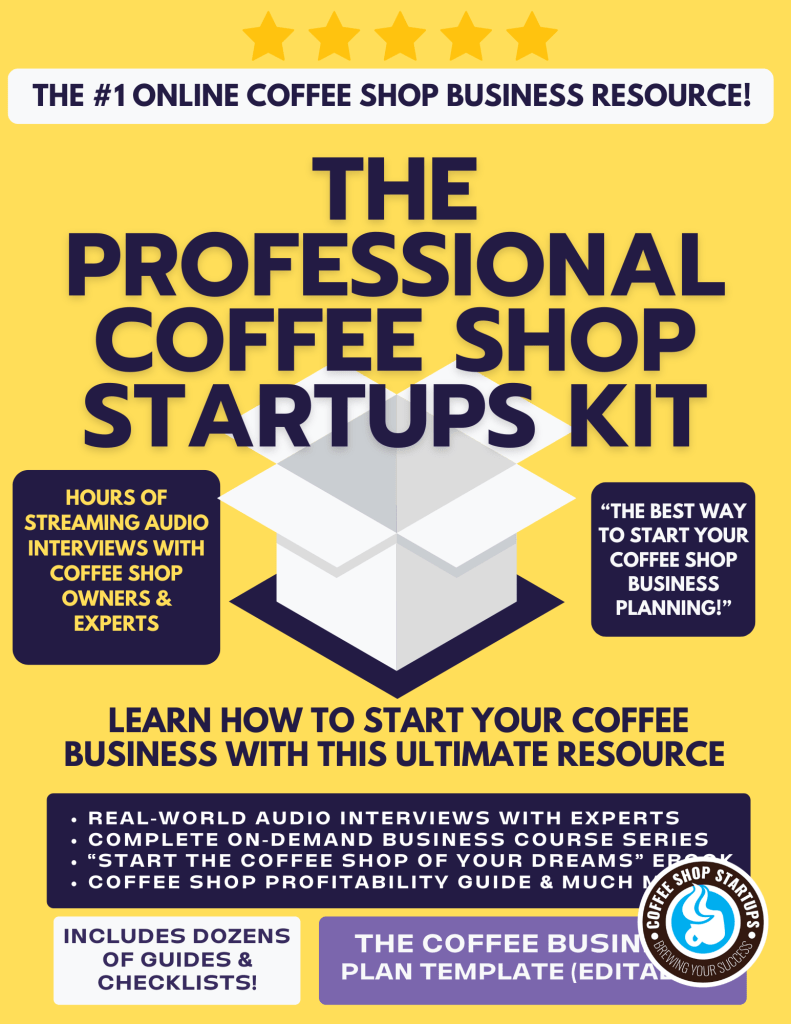
Starting a coffee shop is exciting, but it can also feel overwhelming. Where do you start? What steps should you take? How do you avoid costly mistakes? That’s where the Professional Coffee Shop Startups Kit comes in. It’s designed to give you a clear, practical roadmap to opening a successful coffee business—without wasting time or money on guesswork.
Inside, you’ll find:
 Expert interviews with real coffee shop owners and business experts.
An On-Demand 37-lecture course covering everything from business planning to daily operations.
Editable coffee shop business templates, financial documents, checklists, and planning tools to keep you on track.
A step-by-step startup guide that walks you through concept development, permits, branding, and more.
Cost-saving strategies to help you launch your coffee business on a budget.
Whether planning a small coffee cart or a full-scale café, this kit is built to help you start confidently. Join the thousands of successful coffee entrepreneurs who started with a dream and a great plan. Your journey to coffee shop greatness begins right here!
Comprehensive. Proven. Affordable.
The Professional Coffee Shop Startup Kit
(Instantly Delivered To You)
* The information on this page is for educational purposes only. We do not offer legal or investment advice.

Coffee Shop Startups
Based in Seattle, Washington, USA, Coffee Shop Startups is dedicated to providing you with the most relevant information on how to start a coffee shop business successfully. Over the last 11 years, we've helped thousands of aspiring coffee business owners worldwide. We harness the experience, wisdom, and knowledge of many successful coffee shop owners to help you increase your chances of success and profits. We support business owners who want to start a coffee business by providing them with valuable information on starting their coffee business successfully.