Why Most Coffee Shops Struggle to Make a Profit (And How to Turn It Around)
Opening a coffee shop is exciting.
The smell of espresso, the design of your space, the idea of creating a place where your neighbors meet, it’s easy to fall in love with the vision. In many ways, that excitement is what moves your coffee shop startup forward.
But here’s the hard truth:
Many independent coffee shops struggle to generate consistent profit. Not because coffee isn’t popular. And not because customers don’t care. But because small operational and financial mistakes compound quickly in a brick-and-mortar business.
I’ve seen this time and time again. After working with coffee entrepreneurs for over a decade — from mobile operators to traditional storefront owners — I’ve watched the same profitability issues surface repeatedly.
Unfortunately, these small missteps often lead to coffee shop closures.
The good news? Most of them are preventable.
If your coffee shop isn’t as profitable as you expected, here are seven likely reasons — and what you can do about each one.
Your Concept Isn’t Clearly Defined
You may have started with a clear vision. But over time, small changes creep in. A new menu item here. A new promotion there. Eventually, your concept becomes diluted.
Many struggling coffee shops try to serve everyone instead of focusing on a clearly defined customer. When your coffee shop brand doesn’t clearly communicate who your shop is for, you attract a mix of customers who may not connect with your products, pricing, or overall vibe.
When that happens, confusion sets in. Customers can’t clearly explain what makes your shop special. Your Unique Selling Proposition (USP) weakens.
Clarity attracts customers. Confusion pushes them to competitors.
Your Rent and Fixed Costs Are Too High
Commercial rent is one of the biggest pressures in brick-and-mortar retail.
Revenue dips. Wholesale costs rise. Emergencies happen. Meanwhile, your lease payment doesn’t change.
Choosing a “prime” location or newer building may feel like a smart move — but if the lease consumes too much of your revenue, your cash flow suffers. The same goes for selecting a space that’s larger than your current sales can justify.
Coffee shop success often begins with disciplined control of overhead. That discipline starts before you ever sign a lease.

Your Menu Is Hurting Your Margins
Your menu drives your profitability.
Regularly review every item you offer. Low-margin products take up space, increase labor, and create complexity. If they aren’t selling consistently, they may be quietly draining profit.
Food waste is another silent killer. Every pastry or sandwich thrown away is money lost.
At the same time, look for opportunities to expand high-margin items. Specialty drinks, seasonal offerings, and retail beans can significantly improve margins when executed correctly.
Every item on your menu should justify its shelf space — whether behind the counter or in your display case.
You Overspent Before You Opened
Overspending during startup is common.
Many new owners feel they need brand-new equipment across the board. In reality, quality used equipment can often perform just as well at a fraction of the cost.
Heavy investment in décor, furniture, and build-out before validating demand can also create unnecessary financial strain. High build-out costs, combined with unrealistic sales projections, delay your break-even timeline.
Startup costs directly affect how long it takes your coffee shop to become profitable.
You Don’t Know Your Numbers Weekly
Running a coffee shop is busy and demanding. Inventory moves quickly. Labor shifts change daily. Expenses add up fast.
Without consistent tracking, small financial leaks turn into major problems.
Many struggling coffee shops lose sight of their cost of goods sold (COGS), labor percentage, and break-even point. Some owners don’t even know their true monthly expenses.
And here’s why that’s dangerous:
Many independent coffee shops operate with net profit margins of 2%-6%, especially in their first few years. Well-run shops with strong cost control can achieve 8% to 12%, but that requires discipline and consistency.
If your shop generates $500,000 in annual revenue, your actual profit might only be $25,000 to $40,000 unless your numbers are tightly managed.
With margins this thin:
- Small pricing mistakes add up quickly.
- Overstaffing — even by a few hours per day — can erode profits.
- Waste and inventory mismanagement quietly drain cash.
Knowing your numbers isn’t optional. Understanding your break-even point and tracking weekly performance metrics is critical to long-term survival.
Guessing is expensive!
You’re Underpricing Out of Fear
Pricing decisions should be based on math — not emotion.
Some coffee shop owners compare themselves to large national chains without considering their own cost structure. Others hesitate to raise prices because they fear customer pushback.
But if you haven’t calculated your required profit margin, you may be unintentionally operating at a loss.
Customers value consistency, quality, and experience. Underpricing rarely builds long-term sustainability.
You Opened Without a Marketing System
“Build it, and they will come” worked in Field of Dreams. In real life, it rarely works for small businesses.
Opening without a clear marketing strategy can slowly suffocate an otherwise strong concept.
Posting occasionally on Instagram is not a complete marketing plan. Many coffee shop owners overlook email marketing, local partnerships, POS promotions, staff upselling training, and community engagement strategies.
Foot traffic alone rarely sustains long-term growth.
Get Your Coffee Shop Back in Shape
Profitability doesn’t happen by accident. It’s the result of thoughtful planning, controlled expenses, consistent tracking, and disciplined decision-making.
If you’re serious about building a profitable brick-and-mortar coffee shop, having a clear startup roadmap can prevent costly mistakes and help you move forward with confidence.
Before investing heavily in rent, build-out, and equipment, make sure your numbers, concept, and strategy make sense.
Ready to Get Started?
Start Your Dream Coffee Shop Business
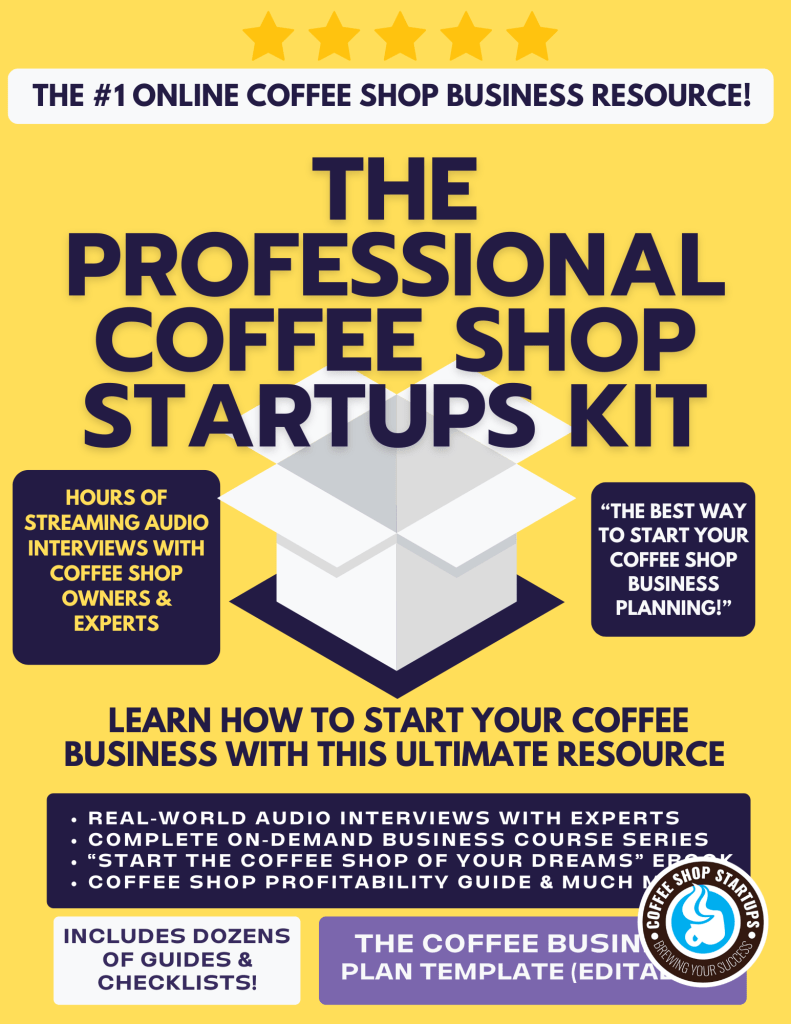
Starting a coffee shop is exciting, but it can also feel overwhelming. Where do you start? What steps should you take? How do you avoid costly mistakes? That’s where the Professional Coffee Shop Startups Kit comes in. It’s designed to give you a clear, practical roadmap to opening a successful coffee business—without wasting time or money on guesswork.
Inside, you'll find:
 Expert interviews with real coffee shop owners and business experts.
An On-Demand 37-lecture course covering everything from business planning to daily operations.
Editable coffee shop business templates, financial documents, checklists, and planning tools to keep you on track.
A step-by-step startup guide that walks you through concept development, permits, branding, and more.
Cost-saving strategies to help you launch your coffee business on a budget.
Whether planning a small coffee cart or a full-scale café, this kit is built to help you start confidently. Join the thousands of successful coffee entrepreneurs who started with a dream and a great plan. Your journey to coffee shop greatness begins right here!
Comprehensive. Proven. Affordable.
The Professional Coffee Shop Startup Kit
(Instantly Delivered To You)


* The information on this page is for educational purposes only. We do not offer legal or investment advice.

Coffee Shop Startups
Based in Seattle, Washington, USA, Coffee Shop Startups is dedicated to providing you with the most relevant information on how to start a coffee shop business successfully. Over the last 11 years, we've helped thousands of aspiring coffee business owners worldwide. We harness the experience, wisdom, and knowledge of many successful coffee shop owners to help you increase your chances of success and profits. We support business owners who want to start a coffee business by providing them with valuable information on starting their coffee business successfully.