How to Start a Coffee Shop
There’s never been a better time to start a coffee shop. Over 1 billion people begin their day with coffee. It's one of the most popular products in the world and continues to grow, which makes it a great business to start.
Chances are your neighborhood – even your street – has plenty of coffee lovers who need a great local shop to get their morning Joe.
With high profit margins and a universal appeal, starting a coffee shop is a great business opportunity.
Now, if you're thinking about starting a coffee shop, you're in the right place. Below, I’ll walk you through the essential steps to get your coffee shop planning started today.
Tip: Explore Coffee Shop Business Articles With our In-Depth Blog Here.
Choose Your Coffee Shop Concept (Buy or New)
Opening a coffee shop begins with selecting the right concept that suits you. There are many ways to start a coffee business, so it helps to focus early.
Along with choosing your concept, you’ll also want to:
- Name your coffee shop
- Create a brand identity
- Develop your menu
- Establish your vibe
- Define your unique selling proposition (USP)
None of these cost money to plan – they just require your time and creativity. In fact, I strongly recommend that you don’t spend any significant money at first without carefully planning your business. The more planning you do, the less likely you are to go over budget.
Types of Coffee Shop Concepts:
- Independent Coffee Shop
A brick-and-mortar space where you design the vibe and the menu. Full creative control and the development of your coffee shop concept that lets you connect with your community. - Drive-Thru Coffee Stand
A lower-cost option that focuses on speed and convenience is starting a drive-thru coffee stand. Keep the menu simple or go all out; it can be very profitable in a good location. - Mobile Coffee Truck Business
Low startup cost, high flexibility, and a great way to start with minimal risk. Starting a coffee truck offers great margins and a high ability to adapt and retain much of your investment. - Franchise Coffee Business
Coffee shop franchises allow you to buy into a proven system. You get branding, operational systems, and support but less creative control and fees. - Espresso Catering and Pop-Ups
Coffee catering offers super low overhead. Serve at events, offices, or farmers' markets. No or low rent or build-out costs.
Unique Sales Proposition (USP)
Your Unique Sales Proposition is what sets your coffee shop apart from your competition. It’s your “thing” that could be a menu item, vibe, location, or service style. It’s important to understand that your Coffee Shop USP will give you a competitive advantage over your competition and attract more customers.
While your USP isn’t necessarily your slogan, it is linked to your coffee shop branding and message to your customers (and your staff).
Tip: It’s not every day that you set out to develop a coffee shop USP, so here are a couple of examples that could get your USP thoughts brewing:
A USP for an all-night coffee shop:
Open Late—Because Our Coffee Fix Doesn’t Stop at 2 pm.
Simple yet powerful if your shop is one of the few places that open late in your area. It might be great for students and night-shift workers.
Coffee Meets Culture: Latte Art + Language Exchange Nights
This USP adds a creative social layer, great for multicultural communities or college towns. Builds loyal foot traffic midweek.
Research Your Target Market
Knowing your coffee shop customer is essential. Who are they? What do they want? Why do they want it?
Many people love coffee, but they may not necessarily be your ideal customers for your coffee shop. Determining who they are and building your coffee business around their needs will be crucial for your success.
Once you know your customer, you can shape your brand, affirm your USP, and your offerings to meet their needs.
You also need to look at the competition. Who’s already serving your potential customers? How will you stand out? What are their offerings and price points like?
Consider the following:
- Price Point
Students may need affordable options. Professionals may expect premium offerings. Align your pricing accordingly. - Menu Choices
Will your customers want (and expect) healthy options? Breakfast items? Afternoon wine? Your menu should reflect their preferences. It’s easy to add to your menu, but doing so without a plan can create waste. - Convenience Factors
Everyone loves good coffee, but they love fast, easy access even more. Your ability to serve quickly (or meet the expectations of your customers) will help you maximize sales.
Example Coffee Shop Customer Profiles:
It will be helpful to develop some basic customer profiles in your planning, such as:
The College student: Early 20s, interested in healthy alternatives, looking for a place to study, meet with friends, and maybe get a light meal with their coffee, with inexpensive menu options.
The Morning/Afternoon Commuter: A commuter on their way to work looks to get a quick cup of coffee, receive fast customer service, and enjoy on-the-go breakfast options ready in under 5 minutes.
Neighborhood Soccer Moms Hangout: Suburban, modern, and comfortable space for moms or community groups to hang out during the day. An ambiance of cozy yet professional, with a bright and safe place for small kids to hang out. Offering healthy beverages and matcha goodness with an assortment of smoothies and salad options.
Feel free to add any other group of customers to this list. Consider who is in your community and whether you've heard people talking about the coffee they love most. Consider the commonalities among all of them, along with your personal preferences and target audience. You can use this to create a space that caters to a diverse range of people, allowing them to enjoy your coffee.
Develop Your Coffee Shop Menu
I love looking at coffee shop menus. By examining the menu of an independent coffee shop, I gain insight into the minds of coffee shop owners – I can see their vision, creativity, and hopes for the kind of experience they want their customers to have.
Your menu sets the tone for everything – your budget, pricing, unique selling proposition (USP), equipment, revenue expectations, staffing needs, and location requirements.
Your menu is likely the most exciting aspect of your coffee business, so it's essential to develop a menu tailored to your ideal customer. After all, it’s often what brings people in and gets them to return!
Coffee Shop Menus usually have two main categories:
- General Menu Items – The classics everyone expects (lattes, mochas, teas).
- Signature Items – Unique offerings that give your shop personality and keep people coming back (this can shape the USP and general vibe of the place and can be where niches are formed)
In addition to your budget and profit estimates, your menu also guides your staffing, operations, and even the permits you need. Therefore, developing your menu early will help lay the groundwork for everything else.
Your Coffee Shop Menu Pricing.
Pricing should accurately reflect your actual costs and the value you provide.
Here are some quick tips on how to manage your coffee shop pricing initially. After listing the items, break down the costs for each one. For example, start with your ingredient cost, then factor in labor, overhead, and target profit margin.
Now, if you find that too complicated, consider this as a good rule of thumb: price each item at least three times your ingredient cost, then test the market.
Either way, you might have spent some time trying to settle in on the right pricing. Initially, you may not realize a few costs that you have overlooked in your calculations, and you will need to make adjustments. On the other hand, increased efficiencies or finding less expensive supplies as you gain more experience may allow you to decrease your costs.
A coffee shop is a significant investment; therefore, don’t be afraid to charge what your product is worth, especially if your brand, quality, or service stands out.
Additionally, to keep your customers happy, keep things fresh by rotating your season’s favorite. Customers love limited-time drinks and treats, especially when they reflect the season.
Write a Coffee Shop Business Plan
A business plan is your roadmap. It helps you think clearly and demonstrates to lenders or landlords that you're serious about what you aim to accomplish. But this is where most people get stuck!
Writing a coffee shop business plan may seem like a lot of hassle, but it doesn’t have to be!
Your coffee shop business plan doesn’t need to be the length of a full-blown epic novel, but it should cover the basics:
Key Business Plan Sections You May Include:
- Executive Summary
A clear, high-level snapshot of your coffee shop plan. This is the first (and sometimes the last) item readers will actually read, so make it compelling. - Business Description
Describe your coffee shop, including items like who will own it, how it will be managed, and what type of legal structure (like LLC or sole proprietorship) it will be set up as. If you already have a location or neighborhood, detail the address here (you can add specifics in the location section). - Your Concept and Target Market
Describe your shop type and who it serves. A good place to start is determining what type of customer will make up 80% of your business and build your business around them. - Menu Overview
This section highlights key offerings. Include any signature items or any special items you plan to offer. - Budget and Financial Forecasts
Include initial startup costs, operational costs, price points, and revenue goals. You may also want to add where you intend to get your initial financing from. - Brand and Marketing
Add your coffee shop logo, colors, uniforms, promotions, and launch strategy. - Competitive Analysis
Who else is in the market, and how will you stand out? - Exit Strategy
Whether you plan to sell, expand, franchise, or wind down.
Choose Your Business Structure
You need a legal structure for your coffee shop. Most owners choose an LLC. It’s simple, protects your personal assets, and allows for pass-through taxes. Other options include sole proprietorship, partnership, or corporation. Each has pros and cons that need to be considered before moving forward.
Business Structure Options include:
- LLC
- Sole Proprietor
- Partnership
- Corporation
We’ve covered the topics of setting up a coffee shop LLC and a coffee shop sole proprietorship in detail, which I encourage you to review.
Develop a Coffee Shop Budget
Your budget is your blueprint. It tells you what you can afford, what to prioritize, and how to avoid overspending.
Start your budget before picking a location or buying equipment. This helps you avoid committing to more space or expenses than you need.
Develop your budget with the understanding that costs will likely be higher than you anticipate. Therefore, consider adding 10% to 15% to your budget as a margin to help you avoid running out of money.
As you begin to develop your budget, make sure you add the following:
Lease or Rent Costs
Your rent will likely be your biggest single fixed cost. Don’t forget deposits, business district fees, and additional expenses such as pest control and insurance costs.
Build-Out & Renovation
This may include design fees, contractor fees, and permits, as well as plumbing, electrical, flooring, countertops, and fixtures. This is where budgets often blow up, so be sure to list everything you possibly can.
Coffee Shop Equipment
Your equipment starts with your menu, so figure that out first. Once you do, you can determine what kind of espresso machine you need, as well as coffee grinders, brewers, refrigerators, sinks, and a POS system. Remember, all your equipment must be of commercial-grade quality.
Licensing & Permits
Health permits, business licenses, signage permits, fire inspections, etc. These add up fast. These permits are generally standard for any retail food business. Keep in mind that permits will likely be required to remodel or change the structure of a building (those permits are separate).
Cafe Inventory
Coffee beans, milk, syrups, pastries, cups, lids, and napkins. Budget for at least your first 4 weeks.
Coffee Shop Staffing Costs
Your wages, payroll taxes, uniforms, and training time can quickly add up. Don’t forget workers’ comp costs as well.
Coffee Business Marketing & Branding
Logo design, website, signage, initial promo, and grand opening costs.
Business Contingency Fund
As I mentioned earlier, add 10–15% for unexpected expenses, as there will often be surprises!
Find a Coffee Shop Location
There’s no secret that your location matters! Your coffee shop location can make or break your coffee business. You could have amazing coffee and service, but without good foot traffic or visibility, it might not matter, as you will suffer. Therefore, selecting the right location for your coffee shop will be one of the most crucial aspects of your success.
Evaluate potential spaces by asking:
- Does this fit my budget? Before choosing a coffee shop location and negotiating a property lease, it is essential to understand your budget. What can you afford? Do you have the money to open at this location?
- What’s the competition? Is there already existing competition? If so, is the market saturated enough to prevent you from achieving the revenue estimates you need?
- What’s the parking and visibility like? Visibility, accessibility, and parking matter to your business. Some locations may seem wonderful, but if they are difficult to access, have limited parking, or have poor visibility, you will struggle.
Choose a Coffee Shop Space That Works for You
Location is one thing; your actual physical coffee shop space is another.
You might have found the perfect location (street, neighborhood, or building); however, you need to ensure that the actual space is appropriate for your coffee shop.
You’ll need:
- Proper zoning – Ensure that the zoning for your business aligns with your activities. For example, you may decide to roast your own beans. The roasting of coffee beans may not be permitted in your neighborhood – or it may, with certain restrictions.
- Accessibility and parking – We previously discussed parking, but it is also important to note that your location may be entitled to certain parking spaces. Ensure that the number of parking spaces is appropriate. Most importantly, understand the local fire marshal's rules about occupancy and how they relate to your doorways, accessibility, exits, and parking requirements.
- Adequate lighting and plumbing – You may be taking on a wonderful spot that was previously a retail clothing store or office building, but it may not have sufficient plumbing or lighting. Consider the investment you will need to make to ensure that your space will have the plumbing it needs, as well as the interior and exterior lighting it needs
- Enough square footage – Depending on your menu and your concept, you’ll need to consider whether the square footage is appropriate. The space should allow you to build both:
-
- A front-of-house for customers
- A back-of-house for storage, prep, and efficiency
Design Your Coffee Shop
Design isn’t just about looking good. It’s about:
- Making baristas efficient
- Maximizing seating
- Creating a comfortable customer experience
For your coffee shop to be the space you envision but functional, you’ll need an efficient layout, a smart workflow, and an ambiance that fits your brand.
Likely, you’ll need to invest in your coffee shop design (and budget for it). Before choosing an architect and designer, ensure that you are properly zoned. Next, choose an experienced designer who has worked with retail coffee shops or small coffee businesses and ask to see their portfolio.
Coffee Shop Permits and Licenses
You can’t legally open before you have the right permits and licenses. Therefore, before signing a lease and before remodeling your location, research the local zoning, building, and health permit requirements.
Get your licenses early. Seriously.
Typical coffee shop paperwork and licenses include:
- LLC or formation documents
- Business license and DBA
- Health Permit
- Building and fire permits
Hiring and Training Baristas
Great baristas equal happy customers… and happy customers equal profits!
Train your staff to:
- Make consistent drinks
- Deliver great service
- Stay efficient during rush hours
Consistency is key. Build systems that make training repeatable. Finding great baristas may be trickier than you think, but once you do find and hire the right staff, consider making the investment in their barista training.
Develop Your Coffee Brand
Your coffee shop branding ties it all together. It helps customers remember you, recommend you and return to you.
Branding includes:
- Name and logo
- Tagline and mission
- Visuals and shop layout
- Social media voice
- Uniforms and packaging
Final Coffee Shop Startup Tips
Not long ago, the owner of Ballard Coffee Works told me that he started his coffee shop, and he leaned on the wise words of Yoda: “Do or do not. There is no try.”
Sometimes, starting a coffee shop means jumping in with all your energy and your passion. Yet, I think you should always look before you jump. At Coffee Shop Startups, we provide a comprehensive guide to help you get started with your coffee shop planning.
Other Steps to Start a Coffee Shop
We've outlined some essential first steps for starting a coffee shop, but there are additional factors you'll want to consider. Below is a brief list of items to think about:
Design and Layout Planning:
A detailed design and layout plan is often strongly recommended before purchasing coffee equipment or finalizing your location and signing your coffee shop property lease. This should consider customer flow, seating arrangements, the location of the equipment for efficiency, and the overall aesthetic appeal of the space.
Technology and POS System Selection:
In today’s digital age, selecting the right technology and Point of Sale (POS) system can greatly enhance the efficiency of your operations and the customer experience. This includes systems for managing inventory, sales tracking, customer loyalty programs, and even online orders if you plan to offer them.
Sustainability Practices:
Opening and operating a sustainable coffee shop doesn't just help the environment, but it may also help your bottom line. As consumers become more environmentally conscious, incorporating sustainability practices into your business model can serve as a competitive advantage. This can include sourcing ethically produced coffee, offering discounts for customers who bring their own cups, using biodegradable packaging, and implementing waste reduction strategies.
Menu Development and Testing:
While you've mentioned developing your menu, it’s also important to conduct testing. This could involve hosting tasting events for feedback or having soft openings with limited menus to refine your offerings based on real customer preferences.
Marketing and Promotion Strategies:
Beyond the initial promotion of your coffee shop, developing ongoing marketing strategies is crucial for sustained success. This includes leveraging social media, email marketing, participating in community events, and possibly creating a blog or vlog to share stories about your coffee shop, highlight employees, or discuss the origins of your coffee.
Operational Workflows and Employee Training:
Detailed planning on operational workflows, including opening and closing procedures, cleaning, restocking, and emergency handling, can ensure smooth daily operations. Additionally, investing in comprehensive training for your staff not only in making coffee but also in customer service, upselling techniques, and handling difficult situations can significantly enhance the quality of service.
Financial Management and Growth Planning:
After the launch, keeping a close eye on the financial health of your business is critical. This includes regular reviews of your profit margins, cost control measures, and revenue growth strategies. Planning for future growth, whether through new menu items, additional locations, or expanded services, should also be continuous.
Open a Business Bank Account Early
Combining your business funds with your personal money isn't a good idea. Commingling money is frowned upon by the IRS.
Make your life easier at the beginning of your coffee shop planning by establishing your business bank account early.
Separating your business money from your personal money has its advantages. Come tax time, this will help ease the accounting headaches.
Before opening your bank account, you must establish your business structure and obtain an EIN, which you may have to apply for separately at the time of your business formation.
Setup Your Coffee Business Website
It's been said that if your business doesn't exist online, it doesn't exist. Sometimes, this is true for coffee shops.
At the very least, your coffee shop website will be advantageous for affirming your coffee brand and sharing your story with your customers.
For more information about having your coffee shop website, read How to Setup Your Coffee Shop Website.
Create a Timeline To Open Your Coffee Shop
Develop a timeline for starting your coffee shop development. A timeline will help propel you to create your coffee business more effectively and efficiently.
We recommend setting an end goal (or date) and working backward.
Create a realistic time frame with periodic benchmarks. Balance your timeline by placing a little pressure on yourself, but not so much that you get overwhelmed and paralyzed.
Start small, but start.
Get Insurance For Your Coffee Shop
Every coffee shop needs insurance. You want to protect your coffee shop business and your employees. This means having general liability and workers' comp insurance, among others.
Determine what coffee shop insurance you'll need and get it immediately. You will likely need worker's compensation insurance in every state. This will satisfy your state's requirements and protect you and your business assets from a potential accident.
Avoiding accidents will be important through hiring competent people, training, and developing best practices, but “accidents do happen,” so insurance is a must-have.
Ask an insurance agent in your city to help you determine what suits you and your café (for general liability insurance), and check with your state's Worker's Comp agency.
Always Strive for Excellence
As you open a coffee shop, continuously look for ways to improve. Always strive for excellence, whether by providing a higher level of service, improved coffee, menu items, service, or ambiance.
Listen to your customers and employees, and be willing to adapt to fit your customers' needs. By prioritizing excellence, refining your competitive advantage, and always looking for ways to be responsive, you'll position your coffee shop for lasting success and profitability.

Frequently Asked Questions:
How much does a coffee shop cost?
The cost of a coffee shop depends on your business concept, menu, and location.
For example, a drive-thru coffee stand might cost less than a full coffee bar. A bakery & café may cost much more than a small mobile coffee business.
Critical factors, such as your geographic location, real estate market, and labor costs, significantly impact the cost of your coffee shop business.
Traditional Coffee Shop Business Startup Costs
- Small coffee shop with seating: $40,000 to $200,000
- Large coffee shop with seating: $75,000 to $350,000
- Franchise coffee shop: $100,00 to $350,000
- Café & Bakery: $120,000 to $350,000
- Coffee Shop Bookstore: $80,000 to $250,00
We discuss coffee shop startup costs in greater detail:
- How Much Does It Cost to Open a Coffee Shop?
- How to Start a Coffee Shop on a Budget
- Low-Cost Coffee Shop Ideas
What are the requirements to start a coffee shop?
Each city and agency will have specific business regulations and steps you must follow, including the necessary licenses and permits to obtain before opening.
A list of local agencies may include your health department, buildings department, licensing department, and fire department. Your requirements will be based on the type of coffee shop business you'll have, your menu, and other essential factors.
Despite the differences between states, counties, and cities, there are often standard requirements to start a coffee shop from one jurisdiction to the next. We've covered this important topic in our post, Requirements to Start a Coffee Shop.
How much money can I make by opening a coffee shop?
How long your coffee shop turns a profit depends on several key factors, including your total startup costs for the coffee shop, your operational expenses, and your total revenue.
Determining how much money your coffee shop will make is essential to your business planning and should be estimated early.
Your menu, anticipated pricing, sales volume, and costs impact how much revenue your coffee shop will make. Creating strategies to improve your coffee shop profits is an ongoing challenge for coffee shop owners.
For a more in-depth post, please read How Much Do Coffee Shop Owners Make?
Should I Invest in a Coffee Shop Franchise?
One way to open a coffee shop is by becoming part of a franchise. This business model is standard for many industries, including restaurants and coffee shops. If starting your independent coffee shop may be too difficult to muster, but you still want to own your own business, then a coffee shop may be one option.
A coffee shop franchise with a well-established brand, proven menu, and operational guidance may be appealing. Like others, a franchise can have its pros and cons. Determining whether a specific coffee shop franchise will work for you will require research, careful budgeting, and planning.
Should I buy an existing coffee shop?
Buying an existing coffee business is another way to start a coffee shop.
Buying an existing coffee business offers advantages and disadvantages, like opting into a franchise or starting a new coffee shop from scratch. Which option you choose always depends on your current situation, access to funds, timing, and management abilities.
Buying an existing coffee shop can be one of the fastest ways to enter the retail coffee scene and start making money. But you inherit the potential for pitfalls, such as lackluster sales, debt, past tax obligations, and poor branding and goodwill within a community.
Indeed, starting any business from the ground up takes much work, time, and money. Finding a suitable location, negotiating a lease, spending thousands on a build-out, and going through the permitting process can be a big hassle.
Yet, even the most promising coffee shops may be riddled with baggage (financial obligations, legal matters, and a poor reputation). Buying an existing business may also cost more as business owners want to maximize their profit and cash out.
Depending on the coffee shop, buying an existing coffee business might be a good deal. However, it's essential to consider all the pros and cons and decide based on what works best for you.

Ready to Get Started?
Start Your Dream Coffee Shop Business
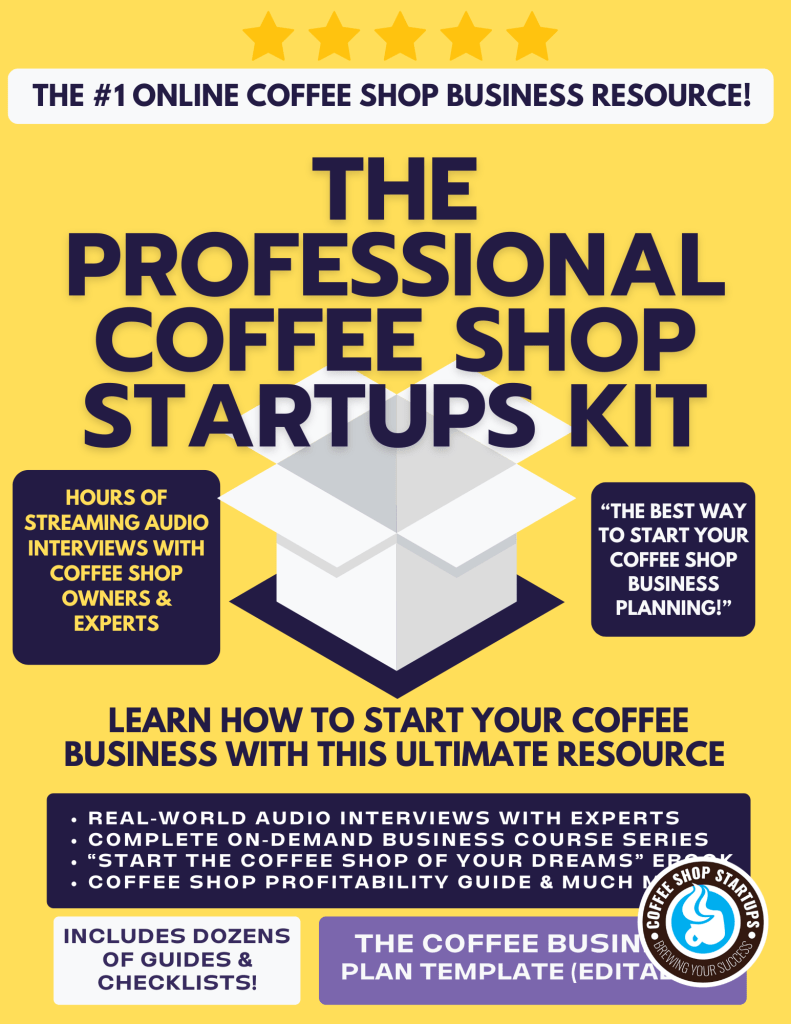
Starting a coffee shop is exciting, but it can also feel overwhelming. Where do you start? What steps should you take? How do you avoid costly mistakes? That’s where the Professional Coffee Shop Startups Kit comes in. It’s designed to give you a clear, practical roadmap to opening a successful coffee business—without wasting time or money on guesswork.
Inside, you'll find:
 Expert interviews with real coffee shop owners and business experts.
An On-Demand 37-lecture course covering everything from business planning to daily operations.
Editable coffee shop business templates, financial documents, checklists, and planning tools to keep you on track.
A step-by-step startup guide that walks you through concept development, permits, branding, and more.
Cost-saving strategies to help you launch your coffee business on a budget.
Whether planning a small coffee cart or a full-scale café, this kit is built to help you start confidently. Join the thousands of successful coffee entrepreneurs who started with a dream and a great plan. Your journey to coffee shop greatness begins right here!
Comprehensive. Proven. Affordable.
The Professional Coffee Shop Startup Kit
(Instantly Delivered To You)



Coffee Shop Startups
Based in Seattle, Washington, USA, Coffee Shop Startups is dedicated to providing you with the most relevant information on how to start a coffee shop business successfully. Over the last 11 years, we've helped thousands of aspiring coffee business owners worldwide. We harness the experience, wisdom, and knowledge of many successful coffee shop owners to help you increase your chances of success and profits. We support business owners who want to start a coffee business by providing them with valuable information on starting their coffee business successfully.